It’s impossible to talk about the history of Barbershop without talking about race. Black and White, to be more specific. And to be even more specific, racism in America. However, some of my research has shown that it’s an interesting issue that is worth a closer look.
My personal opinion is that the white male quartets of the day (early 1900’s) had the power of technology and dollars behind them. (Edison Records, the recording studios, microphones, electricity…you get the point.) Also, my research can be somewhat limited, especially since it virtually all done on-line. I have some “theories”, however, about what may have been going on during this evolution of the Barbershop style, and will try to express them, here.
First of all, there must have been a real strife going on between these musicians of the day, as with the population at large, since the end of slavery. And, it also seems that some of these “Negro” quartets were a real throne in the side of the whites in that they introduce a much freer form. Scot Joplin was playing freely on the piano, and Dixieland music was hitting the seen. (Ragtime, and Dixieland, I believe, were considered, mostly, to be of African-American influence.) The produced and distributed White male quartets, (like Haydn, Edison and Columbia, and not likely considered Barbershop by some of longstanding members, due to some of the lyrics, accompaniment, and several other factors, mainly that the society seems to subscribe to a very high ethical standard), were much stiffer. The end result was better music for both groups, due to competition, and positive musical influences that were able to cross the divide.
Secondly, there is plenty of negative comments that can be made about race and music. I am trying here, to pierce through the obvious for a closer look at what was really going on. If this approach or any comments offends anyone, I must apologize. I am a bit of a Philistine, for sure. There is no malicious intent here, you should know.
For starters, I have discovered a amazing “quartette”, in my perusals on-line: the “Norfolk Jubilee Quartette”. And, this image:

and these amazingly beautiful recordings:
Didn’t it Rain – Norfolk Jubilee Quartet
Standing by the Bedside of a Neighbor – Norfolk Jubilee Singers
What’s The Matter Now – Monarch Jazz/Jubilee Quartet of Norfolk
Four Or Five Times – Monarch Jazz/Jubilee Quartet of Norfolk
provide a bit of insight.
According to Wikipedia, Jubilee quartets were popular African-American religious musical groups in the first half of the 20th century. The name derives from the Fisk Jubilee Singers, a group of male singers organized by students at Fisk University in 1871 to sing Negro spirituals, which had typically been sung by mixed choirs before then. Students at other historically black schools, such as Hampton Institute, Tuskegee Institute and Wilberforce University, followed suit.
The Fisk Jubilee Singers (still active, today) first organized to tour and raise funds for college. Their early repertoire consisted mostly of traditional spirituals, but included some Stephen Foster songs. The original group toured along the Underground Railroad path in the United States, as well as performing in England and Europe. Later nineteenth-century groups also toured in Europe. (Here’s one song where you can here that close harmony.)
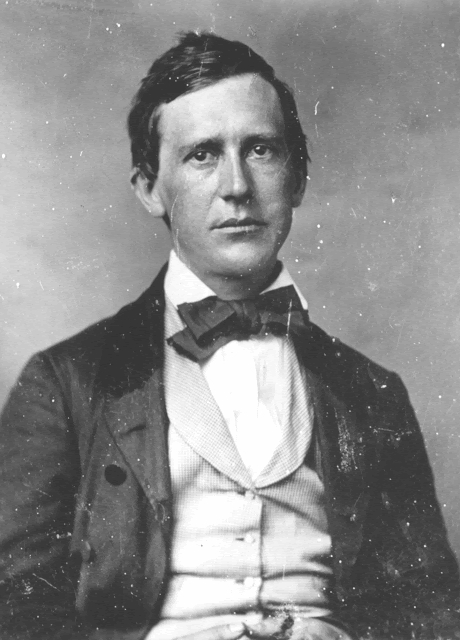 To further emphasize the point of cross-influence, Stephen Collins Foster (July 4, 1826 – January 13, 1864), known as the “father of American music“, was an American songwriter primarily known for his parlor and minstrel music. Foster wrote over 200 songs; among his best-known are “Oh! Susanna,” “Camptown Races,” “Old Folks at Home,” “My Old Kentucky Home,” “Jeanie with the Light Brown Hair,” “Old Black Joe,” and “Beautiful Dreamer.” Many of his compositions remain popular more than 150 years after he wrote them. you can clearly see cross influence, here. And, that there was something very positive going on, along with the negative…just as with all generations.
The early jubilee quartets featured close harmonies, (sound familiar?) formal arrangements and a “flatfooted” style of singing that emphasized restrained musical expression and technique derived from Western musical traditions. Early quartets reinforced their respectable image by adopting uniforms that a university glee club might wear and discouraging improvisation.
Possibly ground zero, however, for the aforementioned “battle of the races” among these musicians may be the song, “Way Down Yonder in the Corn Field“. Endless research can be done on it, on-line. The lyrics in question go, “Some folks say that a crow don’t steal”. My personal “theory” is that it was originally written with the word “Preacher” inserted where the word “Crow” is used in this version. However, the more produced version inserts the work “Nigger”, (i.e., the “N” word.)
Remember, these were much different times. (Hopefully, that goes without saying.) Again, to theorize, my guess is that the Black (or, African-American, or Negro, or Afro-American) singers were not meaning too much harm. (Especially considering the word “Preacher” is not a racially loaded word.) But, once some of the “God-fearing” White (or Euro-American) singers caught wind of it, the arrangers took over to advertise their righteousness by inserting the “N” word instead, seemingly offended by any suggestion that a Preacher might steal. Anyway, I love this song and believe it should be sung with the word “Preacher” used. It’s just way more fun that way, and seems more authentic to me…I mean, versus using the word Crow, (or the “N” word, of course.)
The website, “AFRICAN AMERICAN SECULAR SLAVE SONGS“, may give the best idea about some of these lyrics, and of the mentioned song, in particular. It states:
“Raise A Ruckus Tonight” and most of the other songs included in Thomas W Talley’s 1922 book Negro Folk Rhymes are probably from the 19th century or even earlier. Here’s a passage from that book:
“A few of the Rhymes bear the mark of a somewhat recent date in composition. The majority of them, however, were sung by Negro fathers and mothers in the dark days of American slavery to their children…The little songs were similar in structure to the Jubilee Songs, also of Negro Folk origin.”
[page 229; Kennikat edition, 1964]
-snip-
“Jubilee songs” is an earlier referent for “spirituals”.
**
Somewhat off topic, I believe that the first verse given above in that version of “Raise A Rucus Tonight” is the source for the African American children’s rhyme “Ten Little Angels” (Ten little angels dressed in white/tryin’ to get to heaven by the tail of a kite/but the kite string broke/and one of them fell/instead of going to heaven she when to __/nine little angels etc.)
****
RAISE A RUKUS (Version #2)
Chorus:
Why don’t you come along,
Little children come along,
While the moon is shining bright;
Get on board,
Down by the river shore,
We’re gonna raise a rukus tonight!
Old Aunt Dinah went to town,
(Raise a rukus tonight!)
Ridin’ a billy-goat, leadin’ a hound,
(Raise a rukus tonight!)
Hound dog barked, billy-goat jumped,
(Raise a rukus tonight!)
Threw Aunt Dinah on her rump.
(Raise a rukus tonight!)
(Chorus)
Some folks says that the preacher won’t steal,
(Raise a rukus tonight!)
But, I caught two in my cornfield;
(Raise a rukus tonight!)
One had a shovel and one had a hoe,
(Raise a rukus tonight!)
And they were digging up potatoes by the row.
(Raise a rukus tonight!)
(Chorus)
Way down yonder in Chitlin’ Switch,
(Raise a rukus tonight!)
Bullfrog jumped from ditch to ditch,
(Raise a rukus tonight!)
Bullfrog jumped from the bottom of the well,
(Raise a rukus tonight!)
Swore, by God, he jumped from Hell.
(Raise a rukus tonight!)
(Chorus)
-linear notes:1956 album Josh At Midnight , Josh White and Sam Gary
(Hat Tip to BrooklynJay who posted those lyrics on http://www.mudcat.org/thread.cfm?threadid=73087&messages=20 (January 7, 2011)
Click http://en.wikipedia.org/wiki/Josh_White for information about African American singer, guitarist, songwriter, actor, and civil rights activist Josh White.
Editor:
This version is made up of floaters (verses that are found in other songs). The lines in the Chitlin Switch verse that mention the bull frog jumping from ditch to ditch, and jumping from the bottom of a well marks this verse as part of the very large “Frog in a well” family of songs. Among those song are “Frog Went A Courting”, “Keemo Kimo” and “King Kong Kitchie”. It’s my position that the contemporary song and hand clap rhyme “Down By The Banks Of The Hanky Panky” is an off-shoot of the “Frog In The Well” family.
**
Hat to Tip BrooklynJay for this information which is excerpted from this January 9, 2011 post: http://www.mudcat.org/thread.cfm?threadid=73087&messages=20#3070315


 According to “Get Fit Guy” (see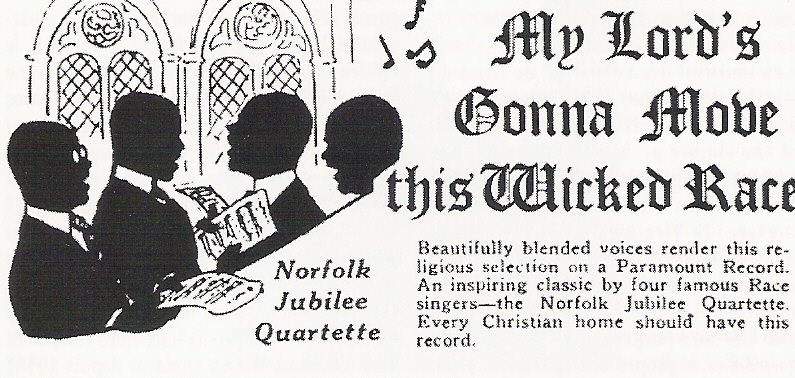
 According to
  According to the
  For years, mothers have been strapping headphones to their bellies to play
  As I look through my Barberpole Cat book, I see Floyd’s name all over it. He’s listed as arranger for: “My Wild Irish Rose”; “Down Our Way”; “Honey/Little ‘Lize – Medley”; “Sweet, Sweet Roses of Morn”; and “Shine on Me”. According to
  According to Wikipedia, Lewis James (July 29, 1892 – February 19, 1959) was a


 Despite her pregnancy, Lucy wants to appear in Ricky’s Gay Nineties revue at the Tropicana. After a disastrous audition, Lucy disguises herself and sneaks into the barbershop quartet number, and then proceeds to ruin it.


 TENOR
TENOR LEAD
LEAD BARITONE
 BASS
BASS


